POINT OF INTEREST  CHURCHES

Church of Sant'Angelo

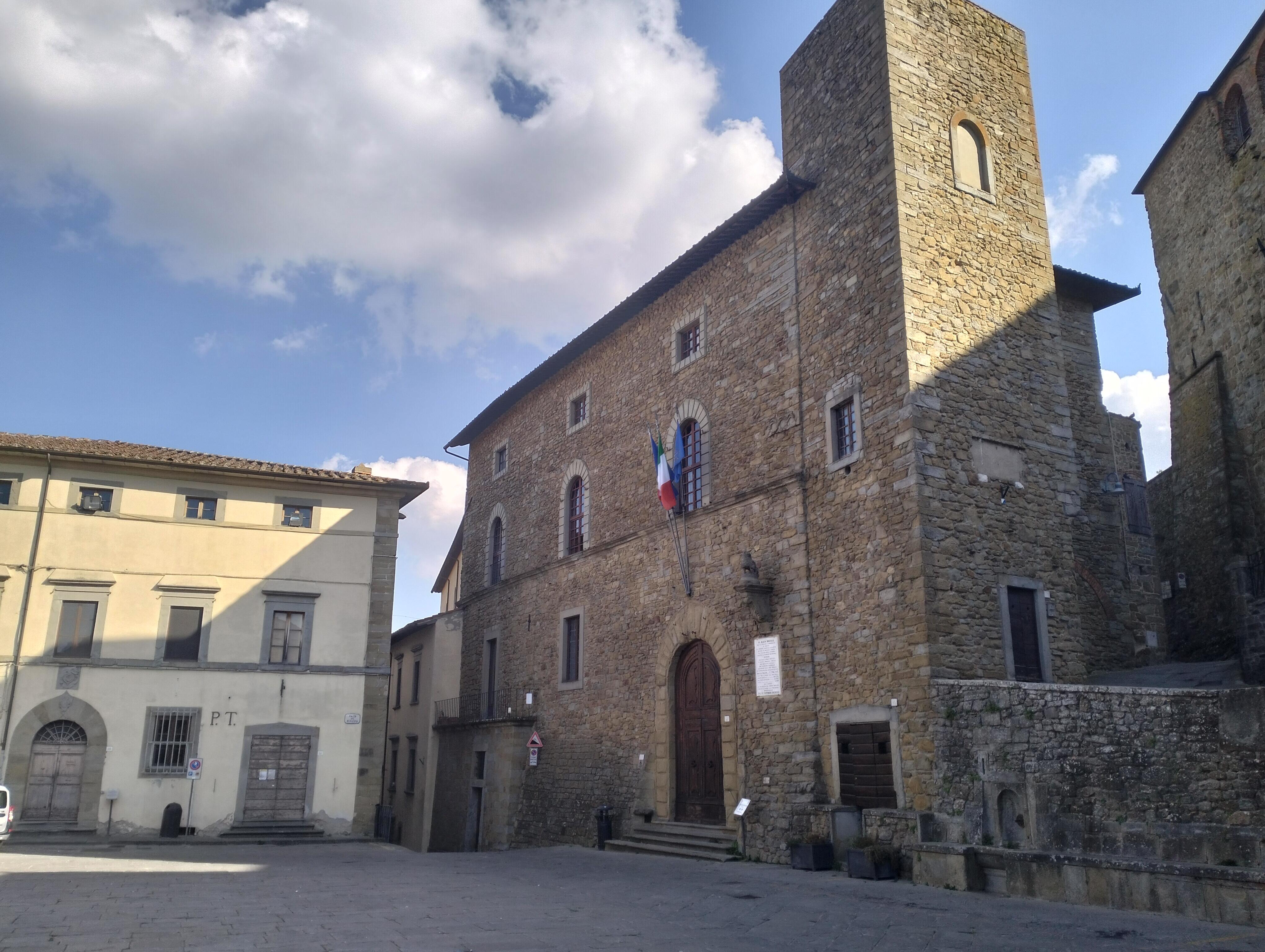
Mentioned in written sources from 1147 onwards, the church of Sant'Angelo is the oldest building in the town.

×

More information :

Mentioned in written sources from 1147 onwards, the church of Sant'Angelo is the oldest building in the town. Between 1229 and 1239, what was once the small chapel of the Castle of Sant'Angelo was rebuilt, taking on the appearance it retains today.

It was a parish church until the Tarlati family expelled all the inhabitants from the keep and the parish priest moved to the church of San Giuliano.

The major transformations occurred after 1532, when the nuns of San Girolamo built the convent on the western side of the keep, using the old church.

They divided the area intended for the courthouse with a long wall; they also reversed the orientation of the church, creating a new entrance on the side of the building (today's entrance to the Pinacoteca).

In 1548, they built the Nuns' Choir, which allowed the nuns to follow the rites without being seen. The main altar, designed by Filippo Berrettini, was placed under the rose window at the entrance.

The church, suppressed in 1785, was used as a hospital and, during the French occupation, as a warehouse. After restoration, it was included in the Pinacoteca Comunale (Municipal Art Gallery).

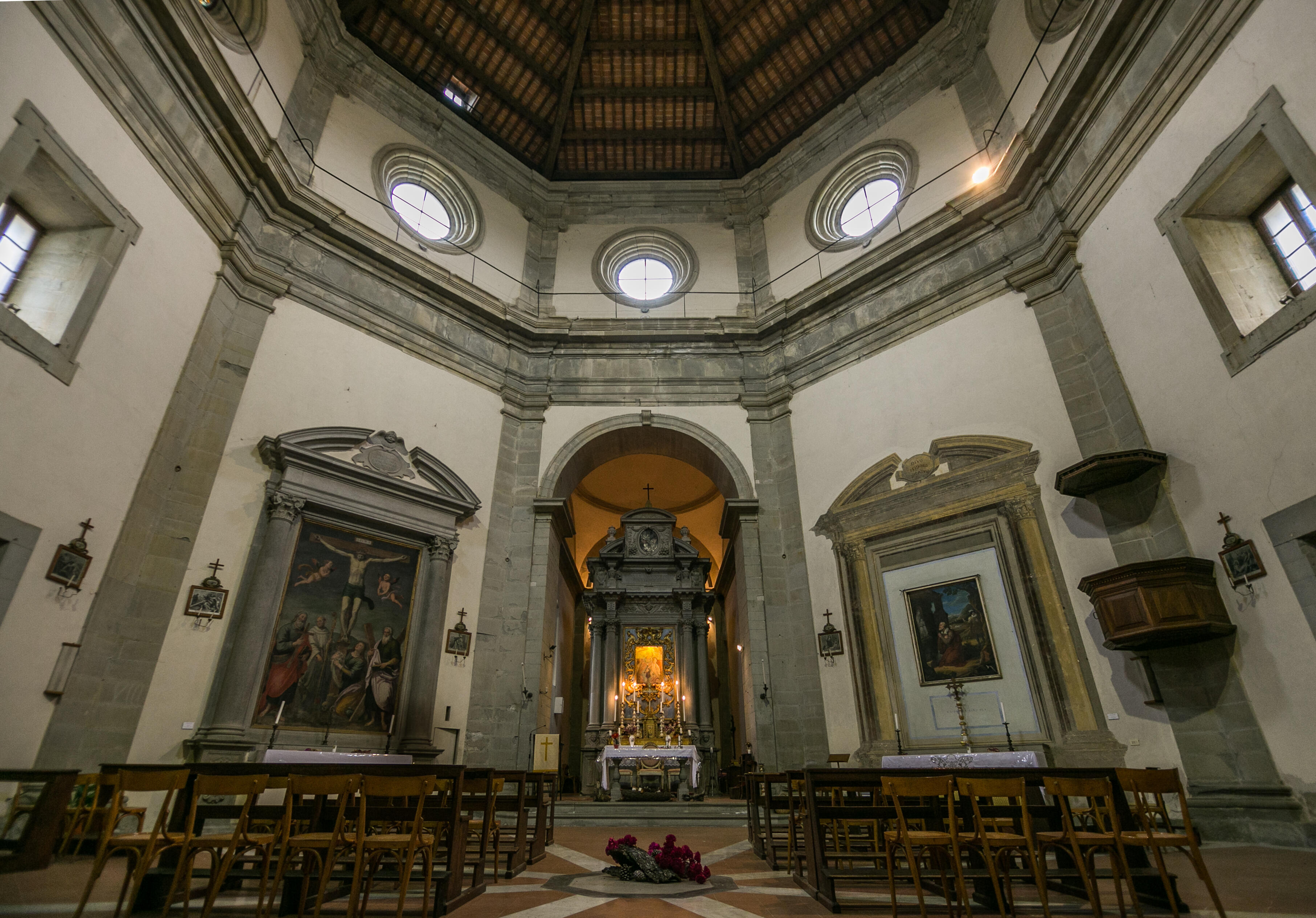
The building has a single nave, a gabled façade, and sandstone block walls. Inside, it has a rectangular floor plan, with walls embellished with Gothic-style arches and single-lancet windows.

The structure covers much older buildings: in the crypt, during restoration work, several wall alignments made of large square blocks belonging to the Etruscan city walls (4th century BC) were discovered.

Archaic Etruscan (bucchero and impasto) and Hellenistic (grey and black-glazed ceramic) finds were displayed in two display cases, as well as a cinerary urn lid with an Etruscan inscription (3rd century BC).

How to Get Here

Address:


()

View in Maps

Contacts

Below are our contacts through which you can reach us:

Share the page

Below are our references through which you can contact us:

You might also be interested in ...

Drag or swipe the images for a more immersive experience.

Sanctuary of Santa Maria delle Grazie del Rivaio

The Sanctuary of Santa Maria delle Grazie in Castiglion Fiorentino stands in an area originally known as Rivaio, a name that emphasizes the presence of a small stream (rivus) that likely ran through the site.

View More

Castiglionese Trail Network

Castiglion Fiorentino is a Tuscan village rich in history, surrounded by green hills. It's the perfect place if you're looking for a quiet retreat to reconnect with nature.

View More

Porta Fiorentina

Porta Fiorentina, which constitutes the entrance to the northern area of ​​the historic centre, is located in what, in ancient times, was called Terziere di Mercato.

View More

Museo Archeologico

The Civic Archaeological Museum of Castiglion Fiorentino was founded in 2001 to exhibit the materials found during archaeological investigations carried out in the area

View More

Church of Jesus

The building, constructed by the Congregation of the Most Holy Sacrament between 1527 and 1545, is adjacent to the ancient Parish Church of San Giuliano (Pieve Vecchia).

View More

Museo della Pieve di San giuliano

Since 2006, the Pieve di San Giuliano in Castiglion Fiorentino has been home to a vast exhibition of sacred art

View More

La Pinacoteca Comunale

The Municipal Art Gallery of Castiglion Fiorentino is housed in the restored rooms of the ancient church of S. Angelo al Cassero

View More

Porta Romana

Anciently called Porta San Michele or Cortonese, Porta Romana represents the southern access to the city

View More

Parish Church of Saints Hippolytus and Cassian in Retina

The Parish Church of Saints Hippolytus and Cassian in Retina, now the Capuchin Church, is located in Pieve a Retina, Castiglion Fiorentino.

View More

Loggiato Vasariano

In front of the Town Hall we find the so-called Vasari loggia: in reality the nine-arched construction, built on the occasion of the reconstruction of the current Town Hall square, dates back to 1513.

View More