POINT OF INTEREST  MONUMENTS

Porta Romana

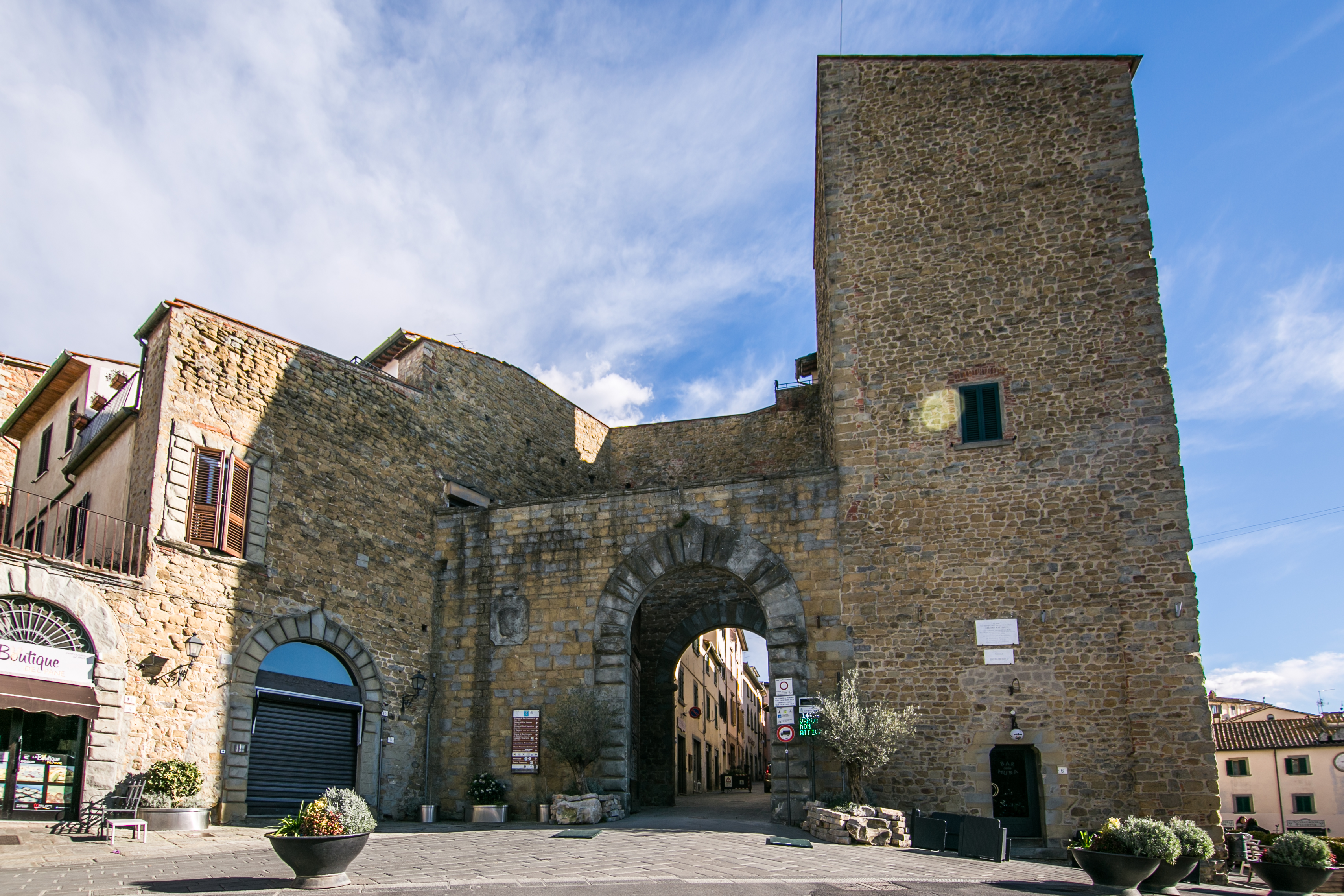
Anciently called Porta San Michele or Cortonese, Porta Romana represents the southern access to the city

×

More information :

Anciently called Porta San Michele or Cortonese, Porta Romana represents the southern entrance to the city. The original structure dates back to the 14th century but the gate was almost completely destroyed by the bombings of 1944 and rebuilt after the war, trying to respect its original forms.

Above the pointed arch, a niche houses the terracotta statue depicting Saint Michael the Archangel, patron saint of the city, a copy of the original polychrome wooden sculpture, made in the first decades of the 14th century and now preserved in the Pinacoteca Comunale.

The original statue, also hit by the bombing, was found miraculously intact among the rubble, a sign long interpreted as a miracle by the citizens of Castiglione.

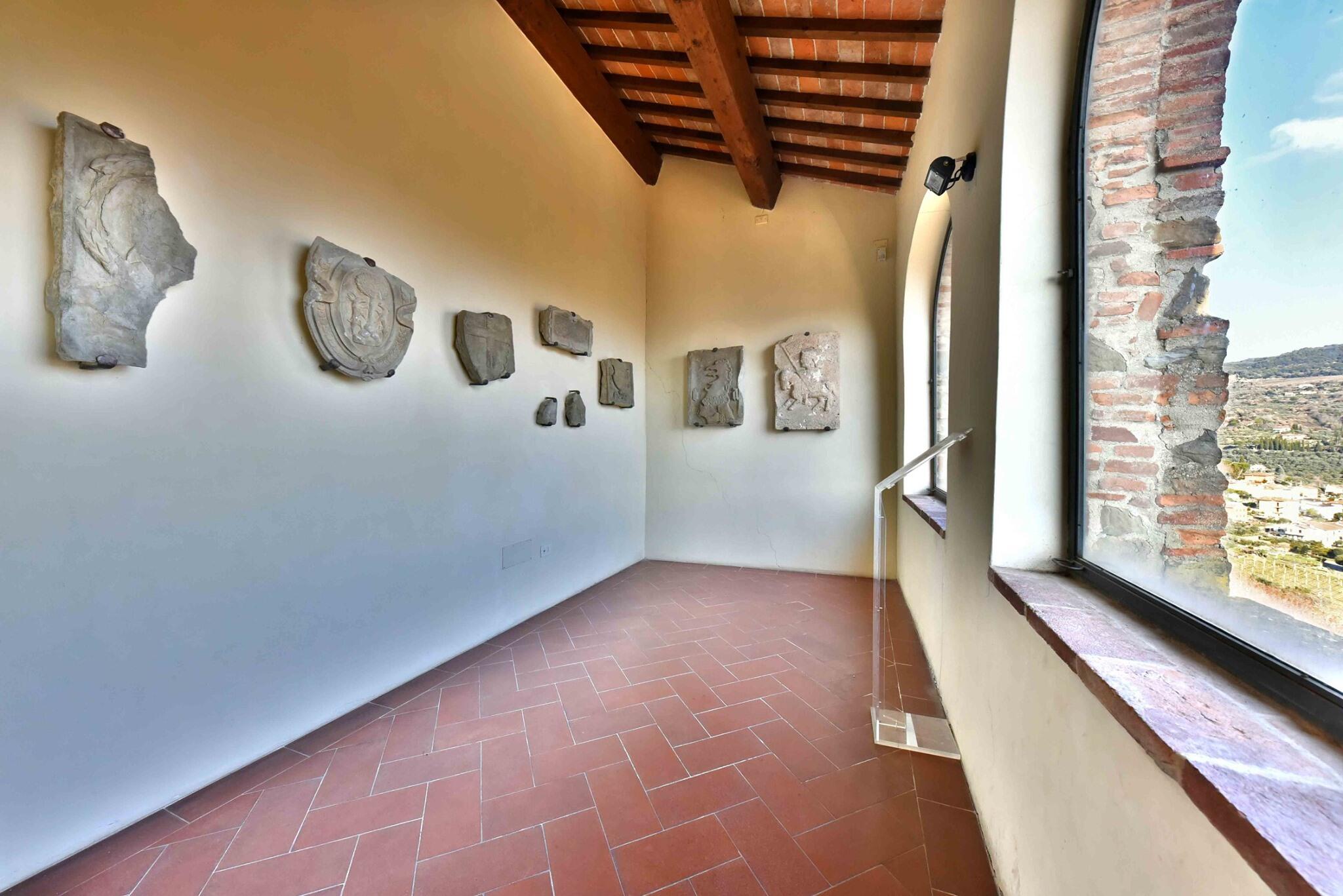
In ancient times, four coats of arms were placed above the gate, depicted in a manuscript by the local historian Giuseppe Ghizzi: one recalled the papal domination, another that of Perugia, while the other two are difficult to read.
How to Get Here

Address:

Via San Michele 1
52043 Castiglion Fiorentino (AR)

View in Maps

Contacts

Below are our contacts through which you can reach us:

Share the page

Below are our references through which you can contact us:

You might also be interested in ...

Drag or swipe the images for a more immersive experience.

Theater of Mario Spina

The history of the Teatro Comunale begins at the end of the 16th century, when the Grand Duke of Tuscany Ferdinand I authorized the Podestà of Castiglion Fiorentino to start an Academy to perform comedies.

View More

Castle of Montecchio Vesponi

The Montecchio Vesponi Castle is one of the most evocative fortresses in all of Tuscany.

View More

Church of the Good Death

The Company of Prayer and Death, or Company of the Good Death, was founded in 1572 to organize a service of prayer, transportation, and burial of the deceased.

View More

Clock Tower

A large structure which, since the Middle Ages, marked the access to the Cassero

View More

Museo Archeologico

The Civic Archaeological Museum of Castiglion Fiorentino was founded in 2001 to exhibit the materials found during archaeological investigations carried out in the area

View More

Walks of Saint Francis

The Ways of St. Francis in Tuscany are a nearly 300-kilometer path that leads pilgrims and travelers to places linked to key episodes in the life of the Saint.

View More

Palazzo Comunale

Political and administrative seat of Castiglion Fiorentino since the end of the 12th century, the Palazzo Comunale, or Palazzo San Michele, was rebuilt by the Perugians in 1375-76 and, subsequently, in 1489

View More

Church of Sant'Angelo

Mentioned in written sources from 1147 onwards, the church of Sant'Angelo is the oldest building in the town.

View More

Parish Church of Saints Hippolytus and Cassian in Retina

The Parish Church of Saints Hippolytus and Cassian in Retina, now the Capuchin Church, is located in Pieve a Retina, Castiglion Fiorentino.

View More

Sanctuary of Santa Maria delle Grazie del Rivaio

The Sanctuary of Santa Maria delle Grazie in Castiglion Fiorentino stands in an area originally known as Rivaio, a name that emphasizes the presence of a small stream (rivus) that likely ran through the site.

View More